
Breaking the Cycle: Why Generational Poverty Hits Women Hard—and How Lifting Them Lifts Communities
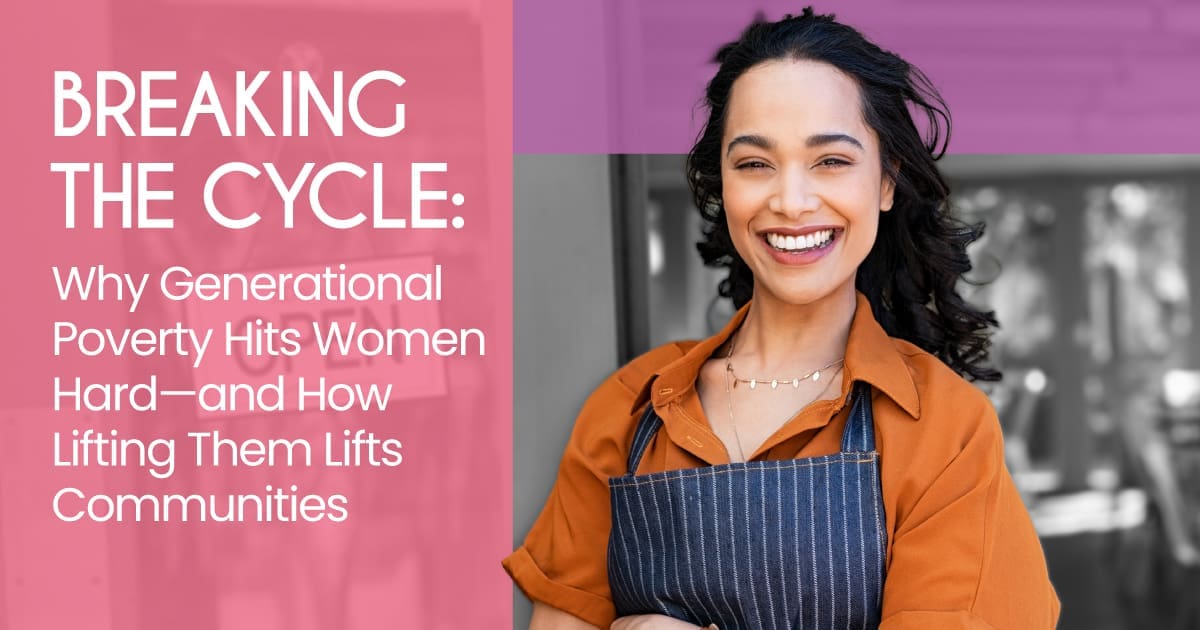
Generational poverty isn’t just one person’s challenge—it’s a multi-layered cycle that stretches across families, neighborhoods, and even generations. For women, the path out of poverty often comes with unique hurdles. But when women rise above those challenges, their success creates ripples of strength and stability that reach their children, their families, and their communities.
The Heavy Burden of Generational Poverty
The struggles of generational poverty run deep. Children born into this cycle often face health challenges that begin before birth, from prenatal stress and low birth weight to ongoing developmental and chronic health concerns. Add in unsafe housing, food insecurity, and limited social networks, and it becomes clear just how hard it is to break free.
For women—especially those leading households or caring for children—these challenges are multiplied by systemic inequalities in wages, employment, and caregiving expectations. Single mothers, for example, experience significantly higher poverty rates than single fathers, even when education levels are similar. Globally, women are more likely to live in extreme poverty, spend more hours on unpaid caregiving, and shoulder invisible burdens that derail education and career opportunities.
Education as a Game-Changer
Education is one of the most powerful tools for breaking the cycle of poverty. Research shows that each additional year of schooling can increase a woman’s wages by 10–20%. But the benefits extend far beyond income. Educated women are more likely to delay marriage, pursue healthier lifestyles, and raise children who thrive academically and socially.
When women are given the chance to learn and grow, their families and communities grow stronger, too.
When Women Rise, Communities Thrive
A woman’s success rarely stops with her. When mothers achieve stability, their children perform better in school and are more likely to pursue higher education themselves. When women secure steady employment, local economies expand, families become more resilient, and future generations gain opportunities they might not have had otherwise.
Programs that combine education, job training, childcare, and wraparound support are especially effective. For example, one program in San Antonio provided women with childcare, transportation, and mentorship. As a result, women completed training faster and entered higher-paying jobs—demonstrating how holistic support can open doors to lasting change.
Empower Women. Transform Futures.
At Live & Learn, we witness these realities every day. We see both the weight of generational poverty and the incredible change that’s possible when women are given the tools and support they deserve. Through financial coaching, wellness-building, lifelong learning, and community-based programming, we don’t just serve women—we empower change-makers whose success strengthens families and entire neighborhoods.
Generational poverty is monumental, but it is not insurmountable. Every investment in a woman’s growth, resilience, and education is also an investment in stronger families, healthier communities, and brighter futures. Every woman lifted is a beacon of hope—and that hope spreads further than we can imagine.